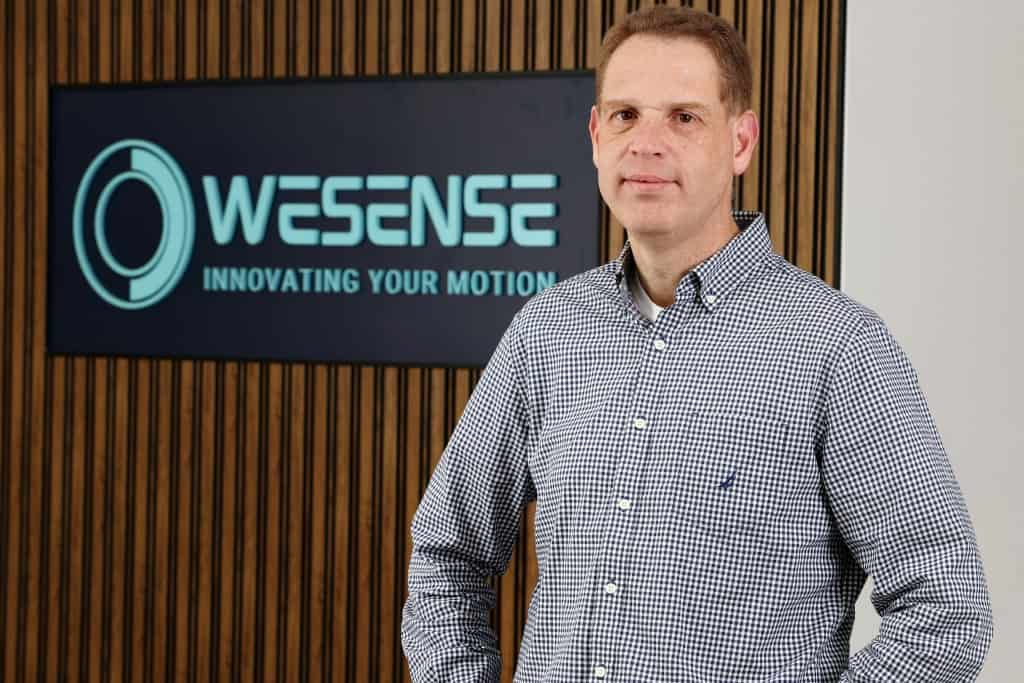
What does it take to deliver the right motion control solution for a demanding application? According to Sharon Gilboa, CEO of Wesense Motion, it starts with engineering expertise, strong supplier partnerships, and a willingness to develop solutions beyond standard product catalogs.
With nearly two decades of experience in the motion control industry, Sharon has worked with customers across multiple sectors, helping them overcome complex engineering challenges through precision components and customized solutions.
In this interview, he shares his journey into motion control, discusses successful custom encoder development projects, explores emerging trends in robotics and automation, and explains what makes a technology supplier a valuable long-term partner.
1. What Drew You to the Field of Motion Control Components?
About twenty years ago, British company Renishaw approached me with an opportunity to establish its Israeli branch. At the time, the company worked through local distributors who primarily focused on quick, same-day sales, with limited involvement in long-term development projects.
However, Israel had significant potential in this area. Many local companies were working on complex development projects, and Renishaw wanted to expand its presence in this market.
I accepted the challenge, established the Israeli branch, hired a team, opened offices, and built a successful operation.
I quickly discovered that motion control was a fascinating field, both technologically and in terms of its applications. Every project was different, and every system presented unique engineering challenges. That variety made the work particularly interesting.
After successfully building the branch, I decided to pursue an independent business. For nearly fifteen years, I have been running a company that goes beyond distributing motion control components. We supply encoders, motors, and drives, while also initiating and supporting custom product development.
By working closely with technology partners, we develop solutions that address specific customer requirements and complex application challenges.
2. Can You Share a Success Story Where Wesense Motion Made a Significant Impact?
We have many success stories, although confidentiality agreements often prevent us from sharing customer names and project details.
One particularly interesting case involved a customer who needed a replacement component for a system already in serial production. The original supplier had discontinued the part, which created a significant challenge.
The system relied on two different encoders working together. We carefully analyzed the system specifications, operating environment, and mechanical limitations.
Working closely with one of our technology suppliers, we developed a customized encoder that replaced both original units.
The new solution fitted into the same available space while delivering improved performance at a lower cost.
After successfully completing the required testing, the product entered full production.
The customer benefited from a reliable replacement solution, reduced costs, and a smaller, lighter system. These last two factors were particularly important for the application.
This project demonstrates the value of understanding the complete system rather than simply looking for a replacement component in an existing product catalog.
3. Which Industries Are Growing Fastest or Leading Innovation Today?
The market has experienced significant changes in recent years. Some sectors, including digital printing, semiconductor manufacturing equipment, and flat panel display production, have faced considerable challenges following COVID-19 and the events of October 7.
At the same time, other industries are experiencing strong growth. In Israel, robotics, particularly medical robotics, as well as defense and aerospace, are driving significant technological development.
These industries demand continuous innovation. Engineers need smaller components, higher performance, improved reliability, and more competitive costs.
Wesense has been working with customers in these sectors for more than a decade. We focus on providing advanced motion control components and customized solutions that help engineers overcome technical limitations and develop increasingly sophisticated systems.
4. What Do You Look for When Choosing Global Technology Suppliers?
We consider our suppliers to be genuine technology partners.
Unlike distributors that work with a very large number of suppliers, we prefer maintaining a smaller, focused group of partners. This allows us to build stronger relationships, develop each partnership over time, and create meaningful value for our customers.
When evaluating a potential supplier, we look beyond its existing product catalog. Technological capabilities, engineering flexibility, and willingness to participate in product development are equally important.
In many cases, an off-the-shelf product simply does not meet the application’s requirements. The customer can either redesign the system around an available component or work with a supplier to develop something new.
We look for partners who are willing to take on these challenges, including projects involving relatively small production volumes.
Our partners must also meet relevant industry certifications, understand the markets we serve, and demonstrate efficiency in both research and development and production.
Another important consideration is their willingness to continue working with Israeli companies and supporting local engineering projects. In today’s geopolitical environment, this commitment cannot be taken for granted.
Ultimately, the right supplier is not simply a company that sells components. It is a partner that contributes technical knowledge, flexibility, and a long-term commitment to finding the right solution.
5. What Emerging Trends Do You See in Robotics and Automation?
The technical requirements of modern robotics and automation systems are evolving rapidly.
Robotic joints, for example, increasingly require smaller, more precise, and more cost-effective components. At the same time, systems operating in demanding environments must withstand mechanical shocks, temperature variations, vibration, and even challenging marine conditions without compromising reliability.
We also see military customers increasingly adapting commercial technologies for defense applications. This approach can help control costs while supporting shorter delivery times.
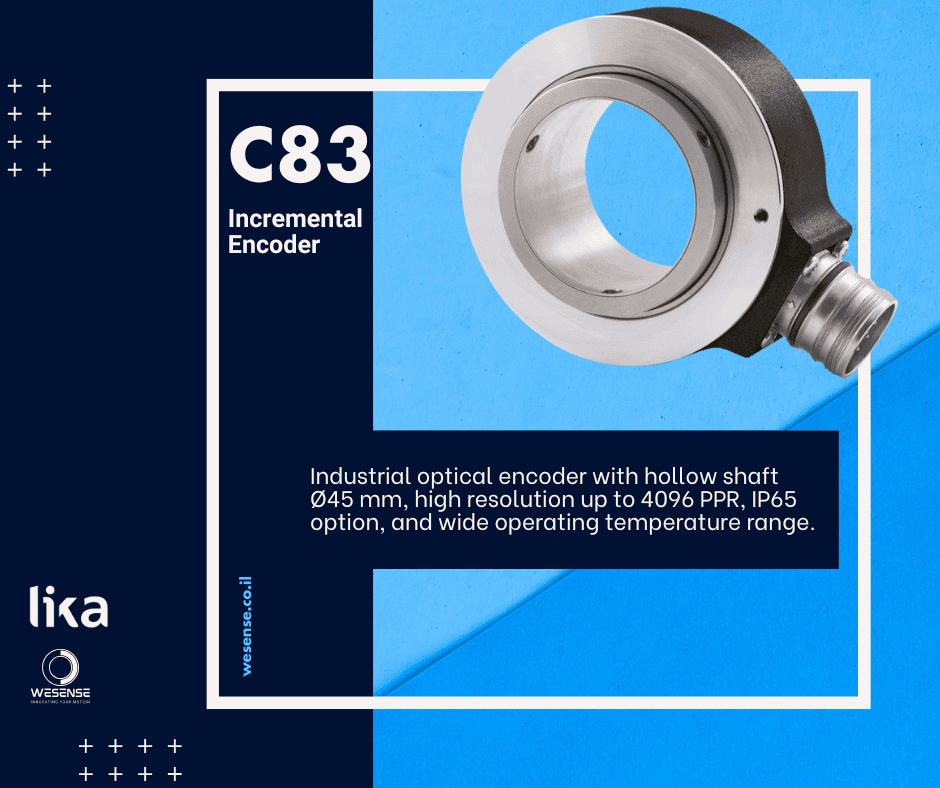
Another important development is the growing transition from incremental to absolute encoders.
Absolute encoders provide position information without requiring the system to establish its position through incremental counting after startup. This capability is particularly valuable in increasingly complex motion control systems.
We also offer dual encoders, which combine incremental and absolute signals in a single unit. This provides engineers with greater flexibility when designing advanced motion control architectures.
As robotics and automation continue to evolve, the demand for compact, accurate, reliable, and cost-effective motion control components will only increase.
Engineering Partnerships That Drive Innovation
For Sharon Gilboa and the team at Wesense Motion, successful motion control solutions are built on more than selecting the right component.
They require a deep understanding of the application, close cooperation between engineers and suppliers, and the flexibility to develop customized solutions when standard products are not enough.
By combining technical expertise with long-standing international partnerships, Wesense Motion continues to support customers across medical, industrial, defense, aerospace, and other advanced technology sectors.
Have a challenging motion control application? Contact the Wesense Motion engineering team to explore the right components and customized solutions for your project.